The Geoff Egan Prize for Finds Research
Awards are made to new and unestablished authors in recognition of high-quality research in which the focus is on artefacts of the early-medieval, medieval, and post-medieval periods (excluding ceramics and numismatic studies). The context of the work is insignificant: this may be an undergraduate or Masters project, an artefact report by someone new to the field, or a piece of writing by someon operating on an amateur basis.
- Criteria and Assessment
The award is open to all new scholars working on medieval and post-medieval artefact studies. Applicants may self-nominate or, in the case of students, be nominated by their supervisors, tutors, or Boards of Examiners. There is no need for a supporting statement from the Board, though a sentence outlining the nature and context of the piece of work (essay, dissertation, magazine article etc) from the applicant will be helpful.
Applications may be submitted on a rolling basis, and will be reviewed twice yearly ahead of each of our committee meetings, with work awarded or highly commended. The panel will be looking for originality of thought, professionalism of approach and presentation, and ultimately, awarded submissions will show evidence of the researcher’s exceptional talent and potential for further work in finds research.
Submissions should made using this Google Docs form.
- The Prize
Successful applicants will receive a £100 prize, one year’s membership of the FRG (including eligibility to apply for our new study fund), and a copy of the Datasheet volumes. They may also be invited to submit an article for publication as a Finds Research Group Datasheet, or to have a summary of the work produced in the Group’s newsletter.

2026 Geoff Egan Prize Joint Winner
Samuel Harvey
“Pinning Down Identities”
“Pinning Down Identities focuses on the pin fittings of later Early Medieval brooches in England. Where front designs are worn away, scholars have often used pin fittings to assign cultural identity. This dissertation tests that approach using 141 brooches from the Portable Antiquities Scheme database, combining Excel-based analysis with GIS. The results show that pin fittings frequently do not match other attributes, and additional fitting types were identified beyond existing models. The study demonstrates that pin fittings are highly variable and may reflect individual preference rather than fixed cultural identity, challenging their use as reliable cultural indicators. I am incredibly thankful to the Finds Research Group for awarding me the Geoff Egan Prize. I put my heart and soul into this dissertation, and I hope it shows that even the smallest artefacts can reveal important and unexpected insights.”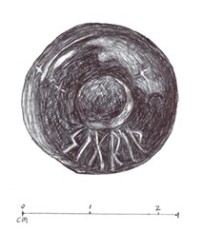
2026 Geoff Egan Prize Joint Winner
Olha Martyniuk
“Spinning Networks”
“This study, ‘Spinning networks: a runic spindle-whorl from Zvenyhorod, Ukraine’, examines a 12th-century object from Kyivan Rus’ within its wider technological and cultural context. The spindle-whorl is made from red pyrophyllite slate sourced from the Ovruch Ridge—the only known source of this material in Europe—highlighting a specialised and highly organised medieval industry. The widespread adoption of these distinctive red spindle-whorls, despite no clear functional advantage, suggests cultural preference and associations with prestige. As essential tools in textile production, they also offer valuable insight into the activities of women in medieval society. The find context and its runic inscription—bearing the Old Norse female name Sigriþr—point to far-reaching trade and cultural networks across Europe. I am incredibly honoured to have been awarded the Geoff Egan Prize for this project. My aim has been to bring the archaeology of Kyivan Rus’, and Ukraine in particular, into wider scholarly awareness, and I am grateful that this work contributes to that recognition.” - A History of the Geoff Egan Prize
The prize was set up in memory of Geoff, as a generous, enthusiastic and tireless supporter of finds research. He trained generations of artefacts specialists, and we thought it fitting that his name continue to be used to support up-and-coming researchers in the field. Looking back over the early years of the prize, it is wonderful to see how many winners have gone on to further research and careers in finds research.
Previous winners of the prize include research of important late-medieval artefacts found in Durham; a study of the branding on clay tobacco pipes in York, a biography of Gotlandic brooches, and a study of activity in the medieval Scottish borders. For the first year of the prize (2012), the FRG committee decided to award prizes to two entrants:
Gary Bankhead won for his report on a late medieval pectoral cross from the River Wear, Durham City, which he produced for his first degree whilst at University of Durham.
Jenny Basford won for "Identities and Affinities: branding on clay tobacco pipes from York", which formed part of her doctoral submission to the University of York.
In 2013 Megan von Ackerman won for her research into Viking Age keys.
The prize for 2014 was awarded to Aubrey Steingraber for her research into cultural identities along the medieval Anglo-Scottish border through close analysis of portable antiquities. This work for the University of York earned her a MA with Distinction in Medieval Archaeology.
In 2015 Eleanor March received the prize for her work on 'Pagan apotropaic objects and their incorporation into the Christian world in conversion-period England'
Eleanor has always loved the medieval period, particularly themes of, and relating to, religion, belief, superstition and magic. Throughout her studies she has enjoyed adopting an interdisciplinary approach to research and has become increasingly interested in material culture theories.
She says: "I thoroughly enjoyed researching this topic and exploring how the application of material culture theories to the study of pagan apotropaic objects may help to further our understanding of pagan ideologies. I was already proud of this work and how it was received by my department and still cannot quite believe it has been awarded the Geoff Egan prize. To have achieved this recognition and award at this stage of my career has given me confidence and reassured me in my plans to continue with further study, and for that I am incredibly grateful.”
In 2017, the prize went to Adam Hopper, for A Copper-alloy Conundrum: Analysing the Significance of Copper-alloy Fragments at Anglo-Saxon Lyminge.
In 2018, prizes were awarded to Kevin Claxton for his undergraduate dissertation on the analysis of small finds from the site of the Battle of Cheriton (1643), and to Rik Lettany for work on finds from the Zeebrugge wreck.
In 2019, prizes were awarded to Derek Parrott, for his Masters dissertation on Gotlandic brooches, and to Sarah Partridge, for their BA work on a pair of Ostrogothic gold-and-garnet ear-rings.
In 2020, the Geoff Egan prize was awarded to Lydia Prosser, for her dissertation on Bishops, badges, and 'Becket-fever': the production and use of pilgrim souvenirs in Britain during the Middle Ages.
In 2022, two prizes were again awarded, to Shelby Navone (Elvet Bridge 4027: a Late-Medieval ‘Lyre-Shaped’ Buckle from the Durham River Wear Assemblage), and to Helen Thomas (Producing and Consuming Dress Accessories in Late Medieval Yorkshire).
Geoff Egan: A Tribute.